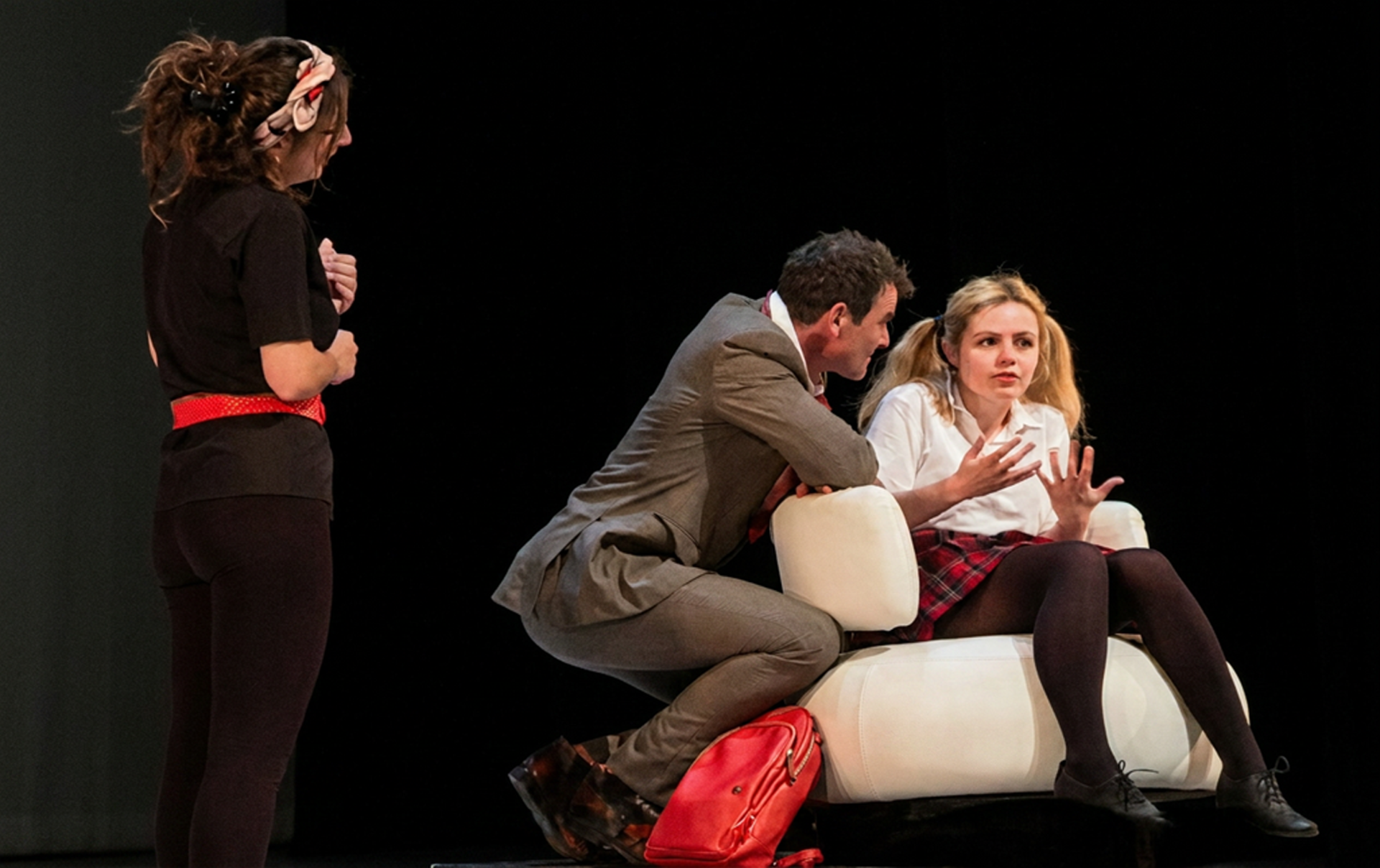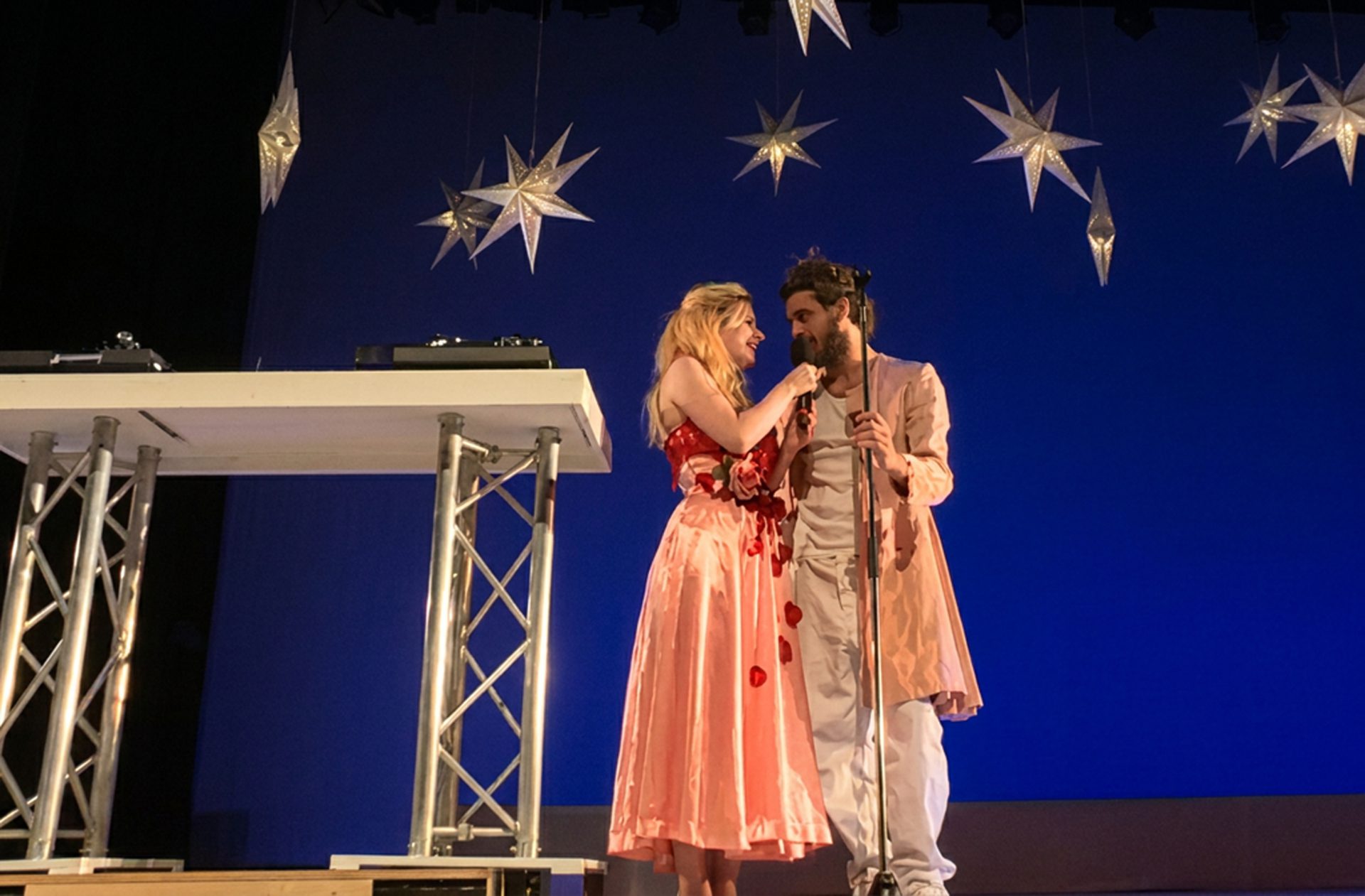
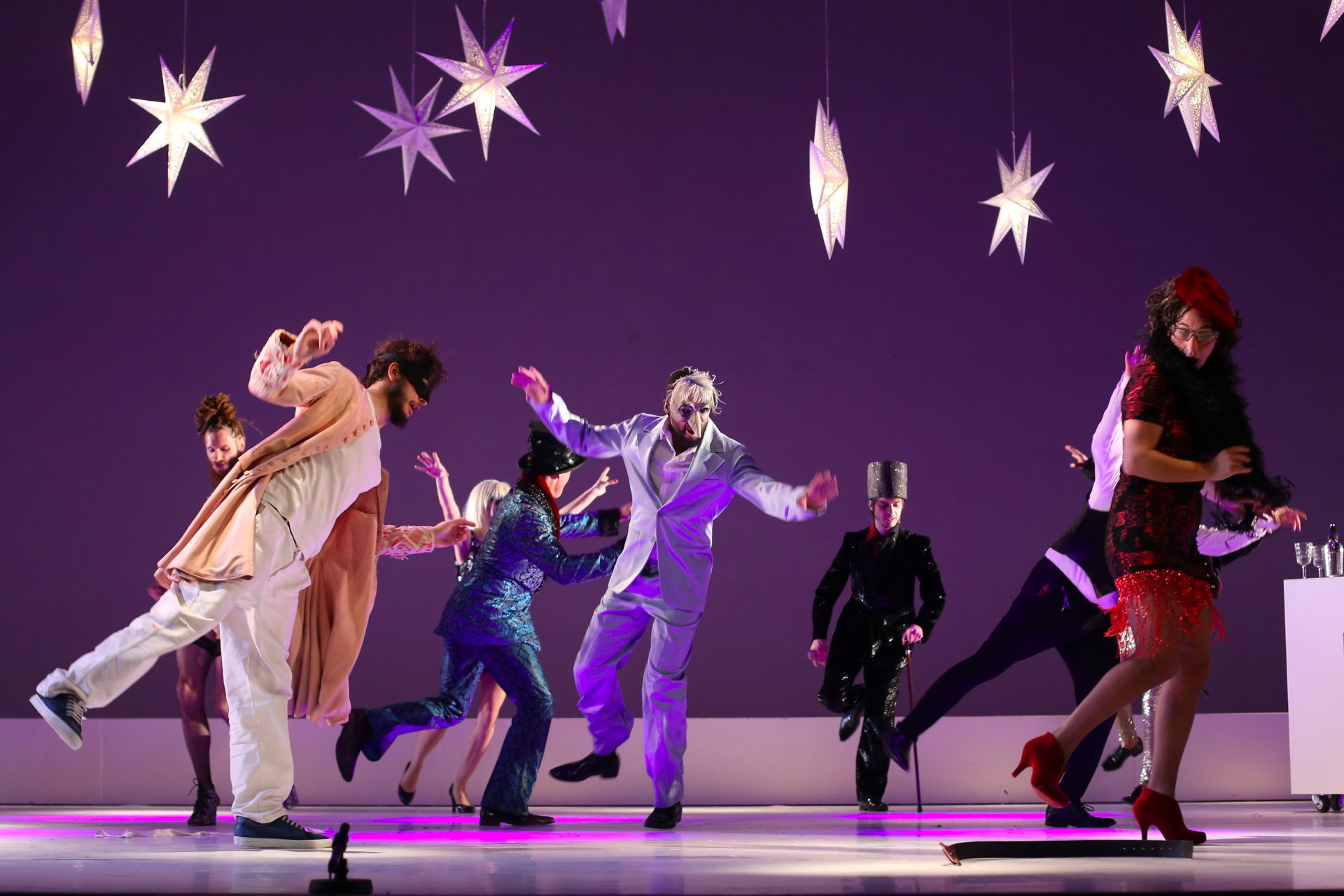
The 2019 Juliette et Roméo was my farewell to the Théâtre National de Nice — and in many ways, it was the most personal piece of work I have ever made.
I had already told this story once before, in 2002, with hip-hop and DJ sets and the raw energy of the street. But by 2019 I was a different director, and I needed to tell it differently. I stripped everything away. No spectacle, no urban grit. Just bodies, breath, scaffolding, and music.
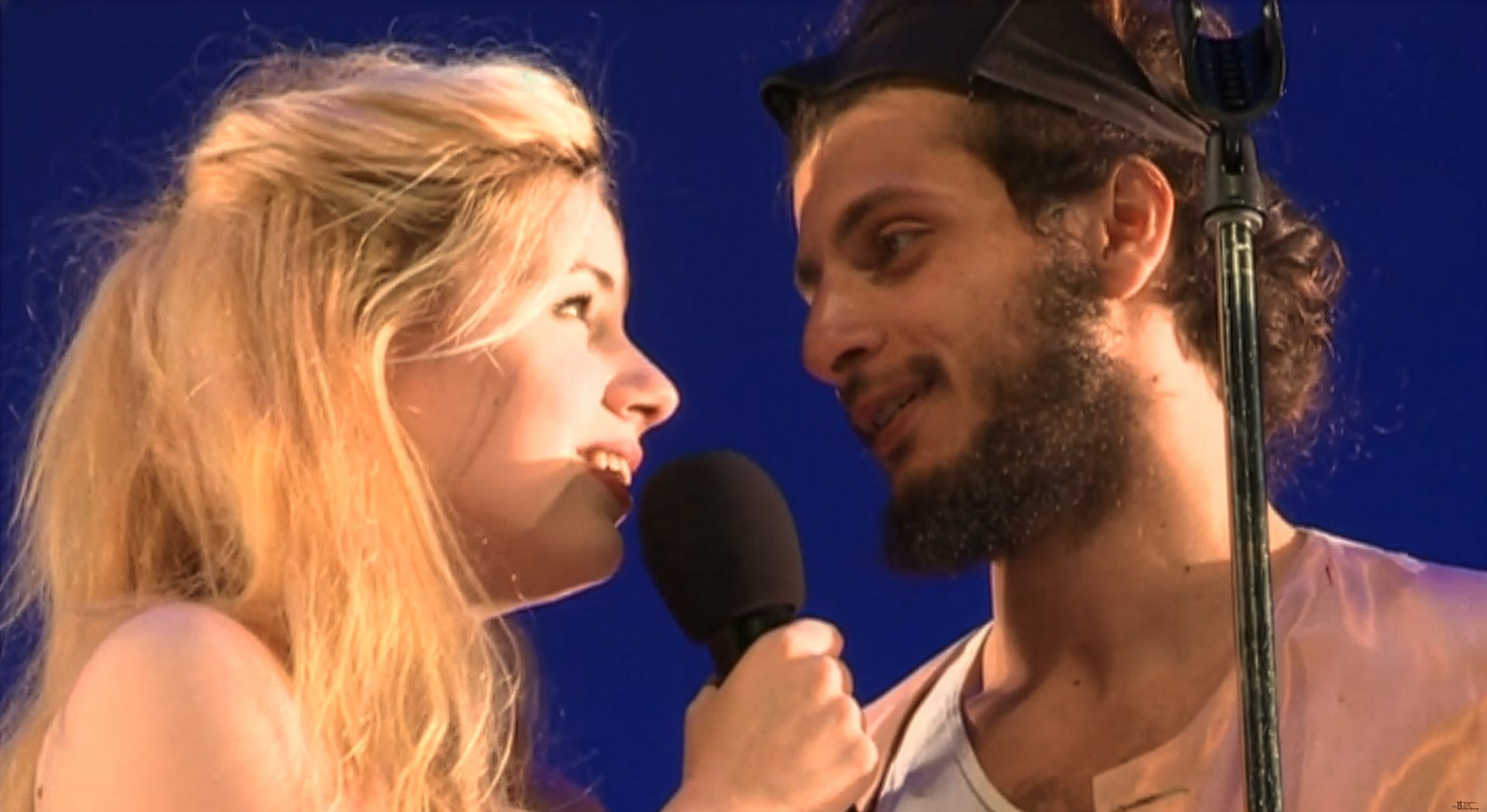
And the music — that was the heart of it. My daughter Maïa composed original songs and performed them live on stage, accompanying herself on guitar. Having her play Juliette was not something I planned lightly. But she brought a vulnerability and a truthfulness that no audition could have found. There is something that happens when the connection between people on stage is real, not performed, and the audience can feel it instantly. Shane Woodward’s Roméo met her there — open, generous, completely present.
The young ensemble from ERACM gave us everything. They were actors, musicians, dancers — often all three at once. Léo-Antonin Lutinier’s choreography was woven so tightly into Maïa’s music that you could not separate one from the other. Guillaume Pomares shaped the sound so that the acoustic, folk-driven atmosphere felt intimate even in a large house. It was theatre as shared ritual — something my father always believed in. The music is never piped in. It belongs to the room. It belongs to everyone in it.
I wanted this production to be about le vivre-ensemble — about living together. The tragedy of Romeo and Juliet is not that two young people die. It is that they die because the adults around them could not find a way to stop fighting. I wanted to leave Nice with that question hanging in the air: what kind of world are we building for the generation that comes after us? The answer has to be better than the one Shakespeare gave us. It has to be.